Oct 7, 2026Flow Meter Selection Guides
Acrylic Rotameter Selection Guide
How to choose an acrylic rotameter for low-flow liquid and gas measurement: flow range, medium, connection, mounting and materials.
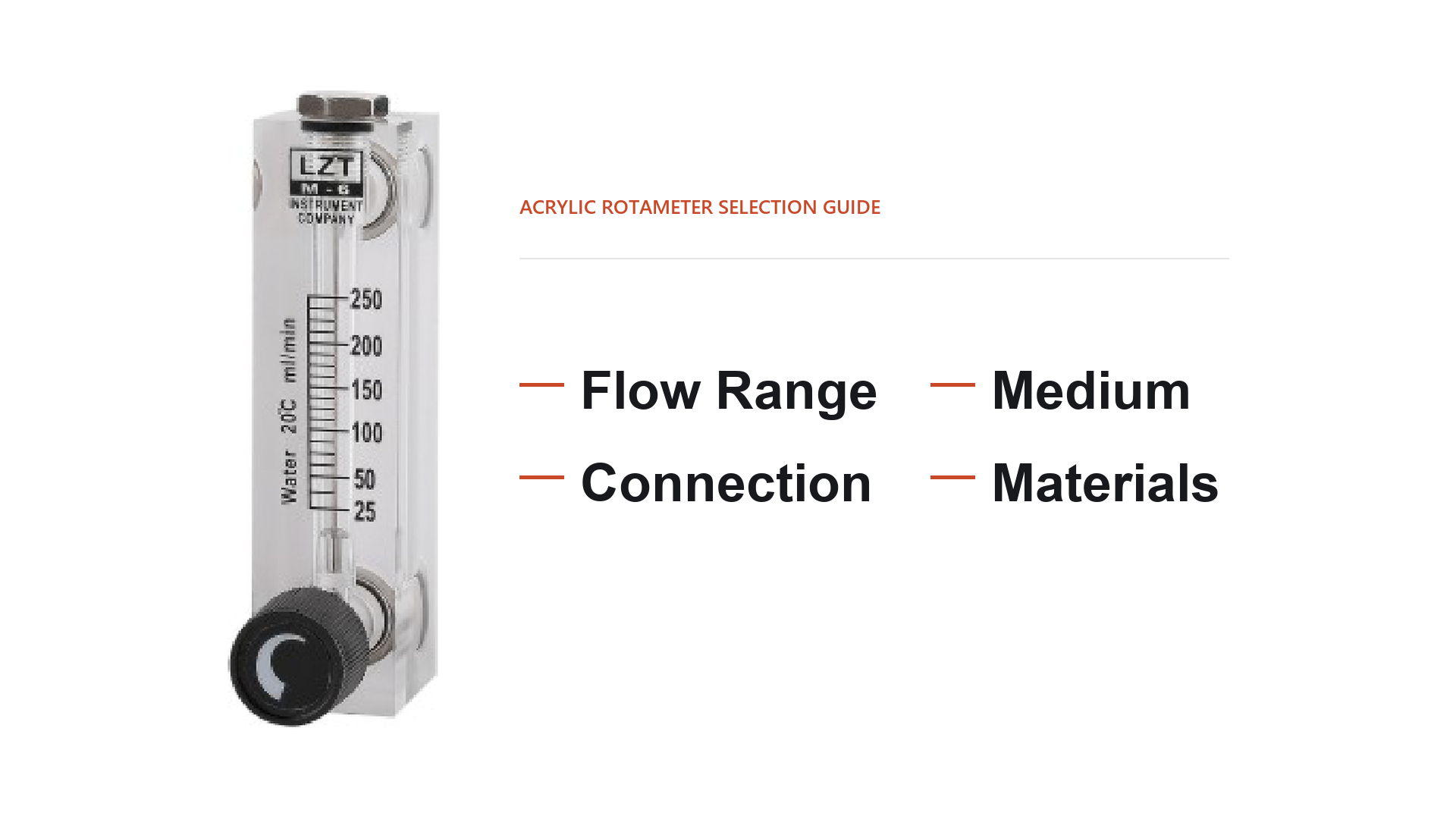
The acrylic rotameter is a variable-area flow meter used mainly for low-flow liquid and gas indication. It is one of the most common families for panel-mounted and inline flow indication.
What an acrylic rotameter is
A rotameter measures flow by the position of a float inside a tapered tube. The acrylic version uses a transparent acrylic tube so the float and scale can be read directly. The fluid flows upward, lifting the float until it balances against the flow.
Where it is used
Acrylic rotameters are commonly used for water treatment, reverse osmosis systems, dosing and filtration, and equipment OEM panel mounting. They are suited to low-flow liquid and gas indication where a direct local reading is wanted.
How to choose the right one
Flow range
Match the meter's measuring range to your working flow. If the float sits at the very bottom or the very top of the scale, choose a different range.
Medium
Confirm whether you are measuring liquid or gas. The same body may be offered with different scales for liquid and gas service.
Connection and mounting
Decide between threaded connection and panel mounting, and confirm the connection size of your line.
Materials and interface
Confirm the materials of the body, fittings and seal, and the connection type, so they suit the fluid being measured.
Points to confirm before ordering
Check the flow range against your working flow, confirm liquid or gas service, confirm connection size and type, and confirm the output or reading you need. Where the standard configuration does not fit, a custom or OEM configuration can be reviewed.