Oct 7, 2026Flow Meter Selection Guides
How to Select the Right Flow Meter for Your Application
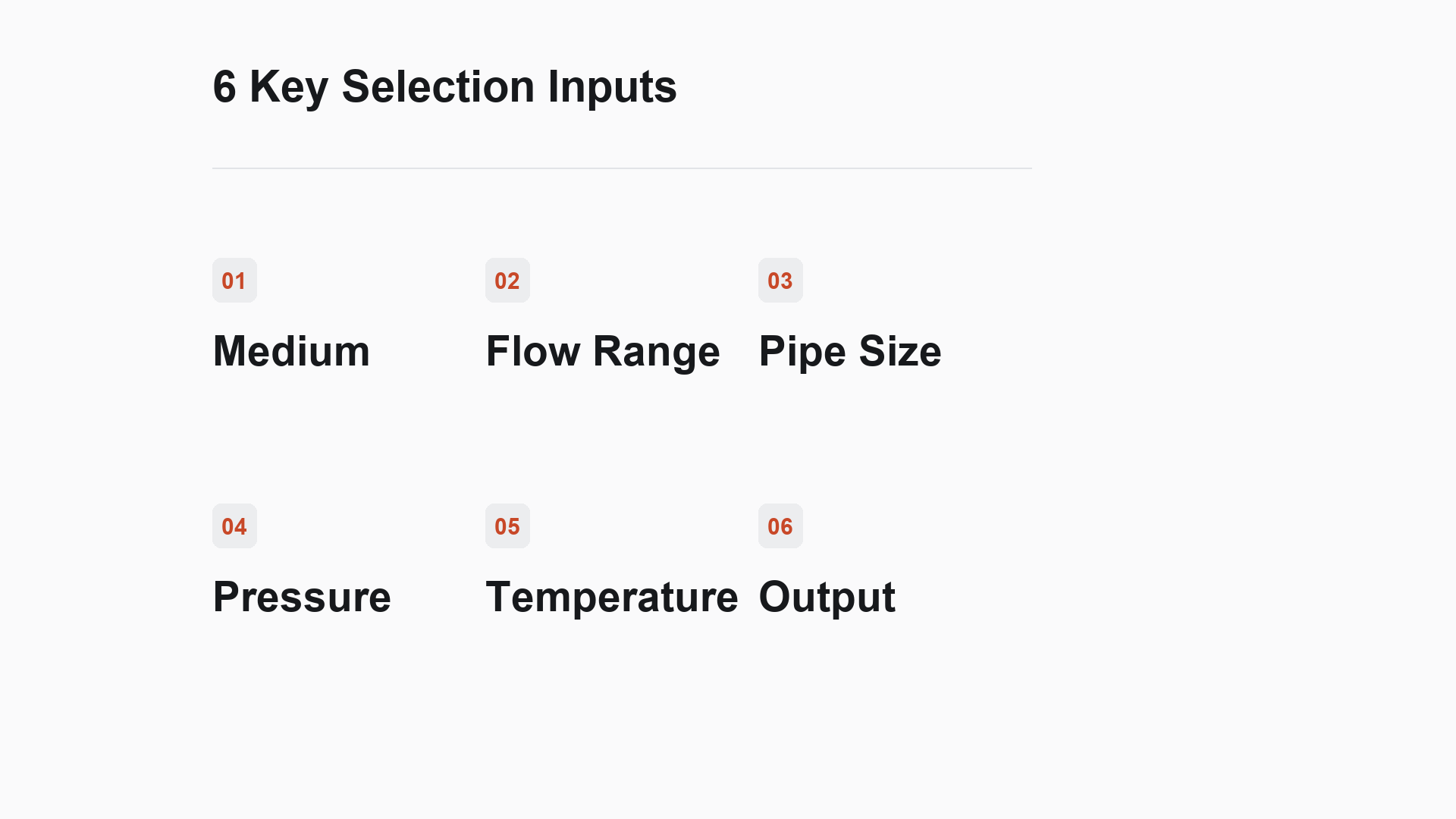
A step-by-step look at the six inputs that decide which flow meter technology fits an application: medium, flow range, pipe size, pressure, temperature and output.
Choosing a flow meter is mainly a matching exercise: the right technology is the one that fits your medium, your flow range and your working conditions.
1. Start with the medium
The first question is what you are measuring. Liquids, gases and steam behave differently, and each flow meter technology has limits.
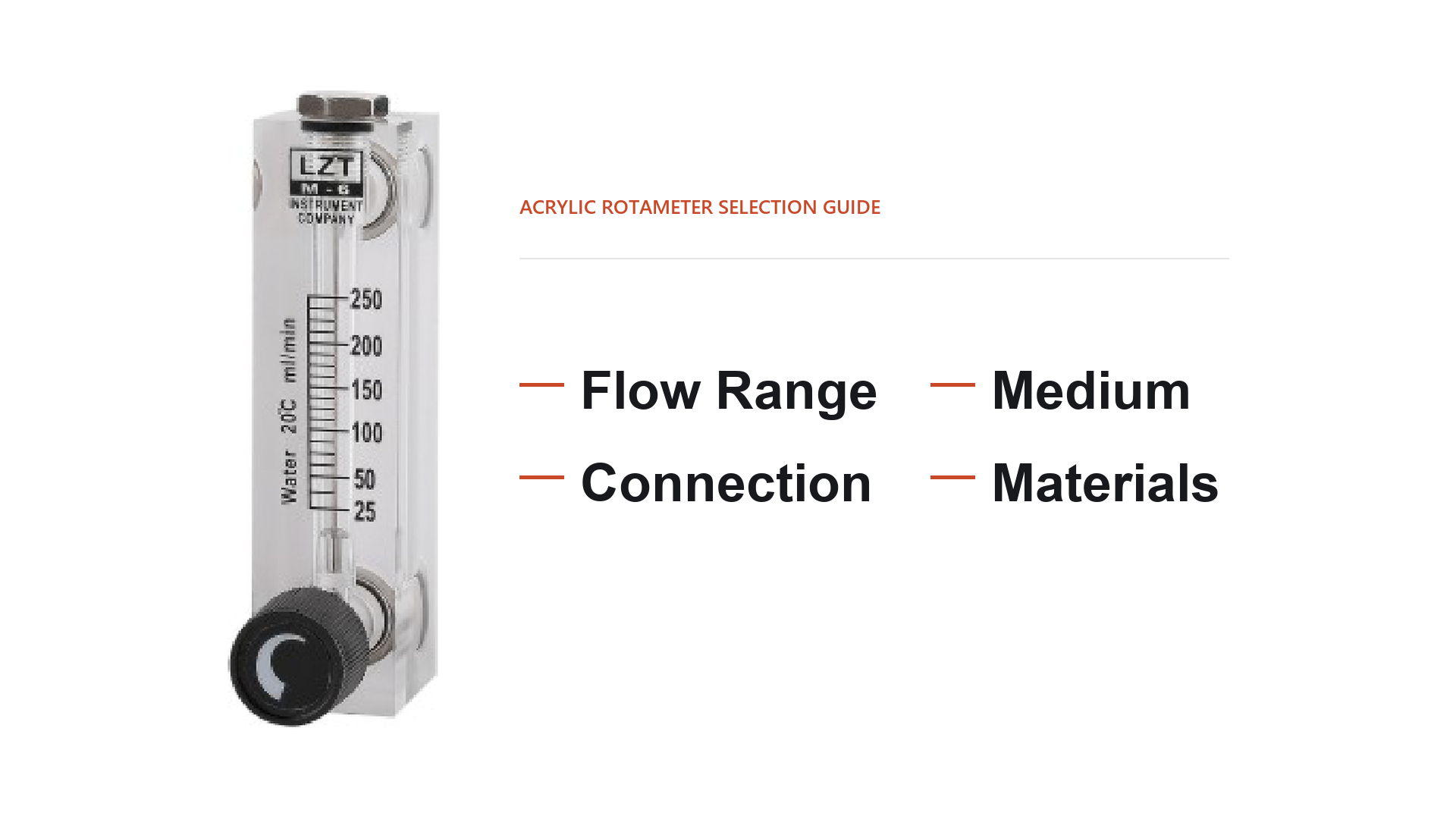
Electromagnetic flow meters measure conductive liquids, so the conductivity of the liquid matters for selection. Variable-area meters (rotameters) are used for low-flow liquid and gas indication. Vortex meters are used for steam, gas and liquid. Turbine meters are used for clean liquids. Thermal mass meters are used for gas and compressed air.
2. Define the flow range
Give the minimum and maximum flow you need to measure, with units. A meter sized outside your real working range will be inaccurate or unreadable. State whether the range is for normal operation or for a maximum that is rarely reached.
3. Note the pipe size and connection
Provide the nominal diameter or the connection size of your line, and how the meter will connect: threaded, flanged, clamped or inserted. This decides which product family and body size apply.
4. Record pressure and temperature
Working pressure and operating temperature narrow the choice of body material, liner and seals. Many variable-area meters operate at moderate pressure and temperature, while process meters cover wider ranges.
5. Decide the output you need
Decide whether you need a local reading, or an electrical signal for a control system. Common options include a local display, 4-20mA, pulse or frequency output, and RS485 communication. Not every product family offers every output, so confirm before ordering.
6. Bring the six points to your enquiry
Medium, flow range, pipe size, pressure, temperature and output are the six inputs needed to recommend a flow meter family and configuration. With these, a supplier can propose a suitable standard meter or, where a standard model does not fit, review a custom development route.
Summary
Select the medium first, then the flow range, then the mechanical and electrical conditions. Confirming all six points before you request a quotation avoids most selection errors.